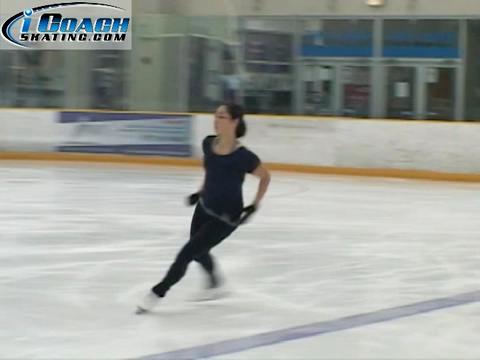
Double Axel Commentary – Mirai Nagasu’s Double Axel Part 2 (Trevor Laak)

Jump specialist Trevor Laak continues his comments (see Part 1 here) on a monster double axel performed by Mirai Nagasu at the 2014 Grassroots to Champions Supercamp in Lansing, MI on July 9, 2014.  The jump was performed during G2C’s “Just Jump” contest which is a contest focused entirely on jumping high.  Mirai was at camp to train with coach Tom Zakrajsek and she also taught at the camp.  The original jump can be seen at normal speed and slow motion here.

The discussion in Part 2 begins with the free leg movement on take-off (h-position debate) and covers the remaining take-off details as well as air position and landing analysis.  Please leave a comment.


lock

Sorry, this content is for members only.

Click here to get access.


Already a member? Login below

Email
Password
 
Remember me (for 2 weeks)

Forgot Password


FavoriteLoadingAdd to “My Favorites” (Beta testing)

3 responses to “Double Axel Commentary – Mirai Nagasu’s Double Axel Part 2 (Trevor Laak)”

  1. David

    Great analysis. But I think the one thing she needs to work on is getting some of the h position and not getting so rotated before leaving the ice. Have a look at a a double axel of a skater that has a consistant triple axel and you will see a difference. Brian Boitano’s double axel is a great example

  2. Trevor

    Thanks for your comment David. If you study video of today’s elite skaters (look at any of our current World and Olympic medalists) you’ll see technique much more similar to Mirai than to Brian Boitano. Boitano’s triple axel was relatively inefficient rotationally, as he took off more open and took longer to get into the rotation of the jump. Brian was a monster jumper and could get away with it. But if you look at nearly all “modern” triple axels, they are not nearly as open as they lift into the air. Check out Olympic Men’s Champion Yuzuru Hanyu or consider any triple axel attempt by Mao Asada. You may not like the look of this technique, but it does appear to be the the optimal way for skaters to accomplish a triple axel, especially if they are just at the athletic minimum to physically do one (as in the case of Mao). Teaching this axel technique allows young skaters with less strength to learn a double or triple axel sooner in their career. Some may argue that Mirai could jump higher if she had more of an h-position, but probably not much higher and certainly not enough higher to make up for the added time she would need to get into rotation. Yes, some skaters have a more open take-off on the double axel than triple axel, especially in the old days. But the trend nowadays is to keep the double and triple as similar as possible to facilitate faster learning of the triple. In my discussions with elite coaches who have taught multiple triple axels (and lots of double axels to young ladies), the general consensus is to create more rotational energy and get to the rotational position faster, much like Mirai does here. Hope that makes sense.

  3. annashapiro

    It’s very helpful to watch these video analyses to understand and reinforce what’s consequential to the jump. Particularly enjoyed the noted applications to skaters at all levels starting from a waltz jump. Thank you!

Leave a Reply to David Cancel reply

Your email address will not be published. Required fields are marked *