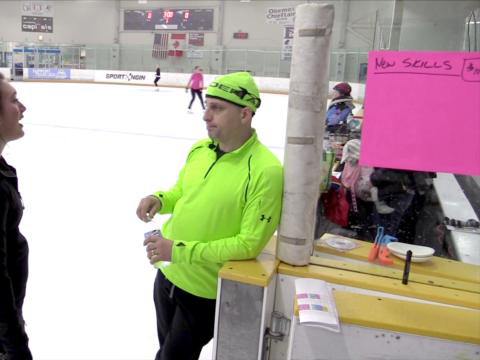
The Effects of Chronic and Acute Pain on Figure Skating Technique and Training (Chris Conte, Trevor Laak)

In the very short video below, National coach Chris Conte explains that skaters in pain almost always lack the ability to train through the pain successfully when they are attempting skills they have never mastered or had success with. The context of this observation is a lesson Chris is giving a skater with a high chronic pain level.

Chris says, “Even if you have mild pain in a jump, if [a skater is] working on a an un-captured element like a triple they don’t have yet, and they’re experiencing any pain, it’s enough to make them back off of the execution of the jump. So it’s a little bit futile to work on the jump.”


Some additional thoughts and comments by iCoachSkating editor Trevor Laak:

There appears to be frightfully little formal research on this topic, so the kind of observation that Chris makes here is very helpful. Coaches and skating parents who encourage skater training of new elements through moderate to severe pain, may be offering counterproductive advice.

Yes, athletic training at the highest levels is filled with stories of motivated athletes training through extreme pain to accomplish astonishing feats or performances. But in the case of almost every person reading this page, the long term health and success of any athlete should take priority.

Pain is typically a warning the body provides that something is wrong. Pain is not normal. Those athletes that train in perpetual pain typically run a number of disturbing risks.

1. Chronic pain has been shown to alter the brain’s structure, meaning it not only hurts, but it may leave lasting mental and physiological effects.

2. The subconscious mind typically makes an effort to avoid pain, meaning a skater in pain may be compensating in their movements to avoid pain, even though not consciously trying to. Thus, training through pain may cause unwanted changes in athletic technique, which may result in other injuries or it may dramatically extend the time until skill mastery.

3. Research clearly shows the cause and effect relationship between depression and pain. Those suffering with chronic pain have higher rates of depression, anxiety, and suicide.

The best advice for pain is always to see a doctor to understand the underlying cause the pain. When doctors clear skaters to continue skating, coaches can help by identifying if pain is altering skating or jump technique, or by helping skaters recognize the need to back off and get healthy in order to make maximum progress.

Training through pain successfully requires walking a fine line between training volume, negative effects on technique, and the potential for faster overall progress from simply halting training to allow the body to heal. It is encouraging that old-school ideas about “toughing it out” are starting to be replaced with more rational approaches to athletic success and athlete well-being.


lock

Sorry, this content is for members only.

Click here to get access.


Already a member? Login below

Email
Password
 
Remember me (for 2 weeks)

Forgot Password


FavoriteLoadingAdd to “My Favorites” (Beta testing)

2 responses to “The Effects of Chronic and Acute Pain on Figure Skating Technique and Training (Chris Conte, Trevor Laak)”

  1. ccoach123

    1. The green outfit needs to go! That is a good camera Trevor . .lol . .My eye hurt.
    2. “A little bit futile”. . .lol . . teaching Chris English is futile! 🙂 Is futility a binary state? Or are their truly degrees of futility? These are thoughts that are going to fester. . .

  2. ccoach123

    If necessity be the mother of invention, sometimes injury can be the mother of progress. It is not always the case, but I have had several instances where injured skaters taking protracted time off became so desperate to stay active in some way, (out of necessity) shift training focus to intently and intensively work on an area of weakness they may have not otherwise addressed. For example: An athlete of median to average flexibility decides to REALLY work at doing splits and improving flexibility over a 6 to 8 week healing period for a foot fracture that is in an immobilizer boot. Instead of going to the rink for lessons on triple loop, she hires a physical therapist and a rhythmic gymnastics coach to design and help her execute the stretching program. When cleared, the skater limits on Ice jumping for several weeks in order to manage impacts and recover psychologically from the injury (*A whole other video worthy topic). Since she loves being back on the ice and can reallocate some time as she ramps her jumping back up, she now has integrated her improved bendy powers into her program with spirals (a split Charlotte is added in a transition to a jump), spins (She has two or 3 outstanding variations that really up the “WOW” factor on two of her spins), and she now has a back-bend Ina Bauer added to the chsq. Perhaps she also worked on her expression and presentation while she added to the choreographer. Perhaps her brilliant coach used the 8 week degradation in old neuromuscular patterns to make one general and a couple targeted improvements to her jumping technique as she regained her confidence and her jumps.It is pretty clear that this student actually returns from the recovery process A MUCH IMPROVED OVERALL SKATER than she may have been had the injury never occurred. I am not arguing an occasional injury is necessarily good. . .lol. . but it does lend weight to the idea that crisis can create opportunity.

    Encouraging this cross focus is also a great way to help limit the detrimental psychological effects of the break because it creates a path for the athlete to shift focus away from dwelling on the injury (potentially leading to or exacerbating the downward pull of depression) and allows for the perception and feeling that actual progress is being made. Anybody else have some good stories?
    Great points you added, Trevor (especially how pain is linked to depression). There is always so much focus on technical things in coaching, psychological issues are often unsung. I would LOVE to see an all-star series focusing primarily on mental training . . Kori, Caroline, Frank, Audrey, Tom, Michelle .etc . .One topic each? A story each perhaps about dealing with a difficult issue? Hope others agree and let you know. . . . I’ll go make the popcorn!
    CC
    PS. Is there a record for the worlds longest I-coach comment? . . 🙂

Leave a Reply to ccoach123 Cancel reply

Your email address will not be published. Required fields are marked *